
Key takeaways
- Discover the best cameras for amature photography: beginner-friendly DSLR and mirrorless picks with simple controls, sharp images, and plenty of room to grow.
As an Amazon Associate I earn from qualifying purchases. This post may contain affiliate links at no extra cost to you.
Learning photography is easier when the camera helps instead of getting in the way. The best cameras for amature photography pair a large sensor with simple automatic modes, so a first-time shooter can capture sharp, colorful images while learning the basics of aperture, shutter speed, and composition at a comfortable pace. A dedicated camera still has real advantages over a phone: a bigger sensor gathers more light, a real lens gives true optical zoom, and physical dials make it easy to learn how each setting changes a picture.
The four cameras in this guide cover the two main paths a beginner can take. A DSLR gives an optical viewfinder, long battery life, and a huge library of lenses. A mirrorless camera trades the mirror box for a smaller body, a live electronic viewfinder, and faster autofocus across the frame. Neither path is wrong, and every camera below ships with a kit lens that covers everyday subjects, from family portraits to travel landscapes.
Each pick below is a current interchangeable-lens camera from a major brand, with a kit lens included, beginner-friendly automatic modes, and room to grow into manual control. Use the comparison table near the end to see the key differences side by side, then read the frequently asked questions if you are still deciding between a DSLR and a mirrorless body.
What to Look For
A first camera should make learning enjoyable. These eight points separate a beginner-friendly camera from one that will frustrate a new shooter.
Sensor size. An APS-C sensor is much larger than a phone sensor, so it gathers more light and produces cleaner images indoors and at dusk. It also makes it easier to blur a busy background behind a portrait subject. Every camera in this guide uses an APS-C sensor, which is the sweet spot for a first interchangeable-lens camera: noticeably better image quality than a phone without the bulk of a full-frame body.
Guided automatic modes. Look for scene modes and a full auto mode that handle exposure while you concentrate on framing. Canon’s Creative Auto and Nikon’s Guide Mode explain each setting in plain language on the screen, so the camera becomes a teacher as well as a tool. A good beginner camera also makes it easy to step up to aperture priority and shutter priority when you are ready.
Interchangeable lenses. A kit lens covers wide-angle landscapes and short portraits, but the real fun starts when you add a second lens. A fast 50mm lens is a classic next step for portraits, while a telephoto zoom opens up wildlife and sports. Check that the mount has affordable lenses available, because the lens collection matters more than the body over time.
Autofocus that keeps up. Beginners photograph children, pets, and friends who rarely sit still. A camera with many autofocus points spread across the frame locks onto a moving subject faster and holds focus while you recompose. Face detection and eye detection are especially helpful for portraits, since they keep the eyes sharp even when the subject moves.
Viewfinder and screen. A DSLR viewfinder shows the scene through the lens with no lag and no battery drain, which many photographers prefer in bright sunlight. A mirrorless electronic viewfinder shows exactly how the exposure will look before you press the shutter, which helps a beginner learn faster. A tilting or vari-angle screen makes low-angle shots and self-portraits much easier.
Battery life. A DSLR can often shoot a full day of sightseeing on one charge, while a smaller mirrorless body may need a spare battery for a long day. Check the rated number of shots per charge and carry a spare battery on trips where charging is inconvenient. A camera that dies at midday is no use, however good its sensor may be.
Wireless sharing. Built-in Wi-Fi and Bluetooth let you send photos to a phone for quick sharing or remote control. This matters more than it sounds: a beginner who can share a good photo within minutes is more likely to keep shooting. Nikon’s SnapBridge and Canon’s Camera Connect app both handle transfers and remote shooting from a phone.
Size, weight, and grip. A camera that feels awkward will stay at home. Hold the camera if you can, or at least compare the weight with the kit lens attached. A deep grip helps with larger lenses, while a compact mirrorless body slips into a small bag for daily carry. Comfort is personal, so treat size as a real feature rather than a footnote.
Top Picks
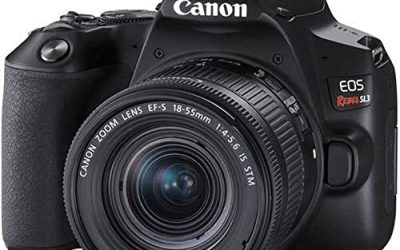
1. Canon EOS Rebel T7 DSLR Camera with EF-S 18-55mm f/3.5-5.6 IS II Lens

The Canon EOS Rebel T7 is the classic first DSLR, and it remains a sensible starting point for anyone learning photography from scratch. Its 24.1 megapixel APS-C sensor captures detailed stills with pleasing color, and the included 18-55mm kit lens covers everything from group photos to landscapes. Built-in Wi-Fi sends images to a phone, and the optical viewfinder gives a clear, lag-free view of the scene. The camera records Full HD video, so family clips look clean and steady, and the DIGIC 4+ processor keeps the camera responsive in everyday use.
What makes the T7 especially friendly for a newcomer is how little it demands on day one. Full auto mode handles exposure, while scene modes for portraits, landscapes, sports, and close-ups tune the settings for the subject in front of the lens. Creative Auto explains aperture and background blur in plain words on the screen, which turns each outing into a small lesson. When confidence grows, aperture priority, shutter priority, and full manual modes are a dial turn away, and the huge EF and EF-S lens library means the next lens is easy to find.
There are limits to know about. The autofocus system uses 9 points, so tracking a fast-moving subject across the frame takes more care than on a newer mirrorless body. The rear screen is fixed rather than tilting, which makes low-angle shots less convenient, and the body lacks a touchscreen. Battery life is solid for a day of casual shooting, rated at around 500 shots per charge. For a beginner who wants a simple, dependable DSLR with a large lens system to grow into, the Rebel T7 is a strong first step.
2. Nikon D3500 DSLR Camera with AF-P DX NIKKOR 18-55mm f/3.5-5.6G VR Lens

The Nikon D3500 is built around one idea: a DSLR should be as easy to use as a point-and-shoot camera. Its 24.2 megapixel APS-C sensor and EXPEED 4 processor produce sharp, vibrant images, and the included 18-55mm VR lens keeps handheld shots steady. Guide Mode is the standout feature for a newcomer: it asks what you want to photograph and walks through the settings step by step on the rear screen, so you learn why a setting works instead of guessing. Bluetooth SnapBridge moves photos to a phone in the background, ready to share.
Battery life is the D3500’s quiet superpower. It is rated at around 1,550 shots per charge, which means a full weekend of shooting without hunting for a charger. The 11-point autofocus system is quick and reliable for everyday subjects, and continuous shooting at 5 frames per second catches children and pets mid-action. Full HD video records at up to 60 frames per second, and the compact, lightweight body is comfortable to carry all day, even with the kit lens attached.
A few trade-offs come with the simple design. The rear screen is fixed and the camera has no touchscreen, so menu navigation uses buttons and the control dial. There is no built-in Wi-Fi, so larger transfers rely on Bluetooth or a cable, and the autofocus point coverage is narrower than on a mirrorless camera. The D3500 is also an older design, so its video features are basic next to newer models. Even so, for a beginner who values ease of use, long battery life, and excellent image quality in a light body, the D3500 is one of the friendliest DSLRs ever made.
3. Sony Alpha a6000 Mirrorless Camera with 16-50mm Power Zoom Lens

The Sony Alpha a6000 proves that a beginner camera can also be fast. Its 24.3 megapixel APS-C sensor pairs with a 179-point hybrid autofocus system that locks onto subjects in a fraction of a second and tracks them across the frame, which is a real advantage when photographing children, pets, or sports. Continuous shooting reaches 11 frames per second, so a burst catches the exact moment a jump peaks or a dog changes direction. The included 16-50mm power zoom lens retracts into a compact shape, so the whole kit fits in a small bag or a jacket pocket.
Despite the speed, the a6000 stays approachable. The electronic viewfinder shows exposure changes live, which helps a beginner see how aperture and shutter speed affect a picture before pressing the shutter. The 3-inch tilting LCD flips up for low-angle shots and self-portraits, and Wi-Fi with NFC sends photos to a phone for quick sharing. The Sony E-mount system has grown into one of the largest mirrorless lens libraries, so a fast prime lens or a telephoto zoom is easy to add later.
The a6000 is an older model, and that shows in a few places. Battery life is rated at around 360 shots per charge, so a spare battery is a wise companion for a long day. The menu system is dense and takes time to learn, and there is no touchscreen or microphone input. Video tops out at Full HD, which is fine for family clips but behind newer models. For a beginner who wants a compact, quick camera with room to grow into a large lens system, the a6000 remains a compelling choice.
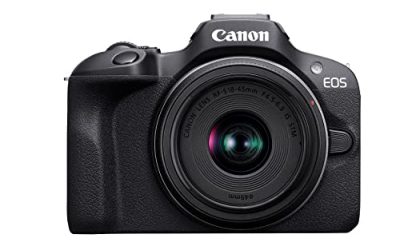
4. Canon EOS R50 Mirrorless Camera with RF-S 18-45mm f/4.5-6.3 IS STM Lens

The Canon EOS R50 is the most modern beginner camera in this guide, and it shows in how it handles. Its 24.2 megapixel APS-C sensor and DIGIC X processor deliver clean, detailed images, while Dual Pixel CMOS AF II tracks people, animals, and vehicles across the frame and holds focus on eyes with confidence. The included 18-45mm kit lens is small and light, and the camera body weighs around 375 grams, so the R50 is easy to carry everywhere. A vari-angle touchscreen flips around for self-portraits and vlogging, and 4K video gives family movies a polished look.
For a newcomer, the R50’s guided interface is the key attraction. Creative Assist explains settings with simple sliders and plain words, while full auto and scene modes handle the technical side until you are ready to take control. Burst shooting reaches 12 frames per second with the electronic first-curtain shutter, which is plenty for sports and active kids. Built-in Wi-Fi and Bluetooth connect to Canon’s phone app for transfers and remote control, and the RF mount opens the door to Canon’s growing range of compact RF-S lenses as skills develop.
There are a few compromises to weigh. Battery life is rated at around 370 shots per charge, so a spare battery is sensible for travel days. The kit lens is slow at the long end, which limits indoor shooting without a flash or a faster lens, and the camera has a single memory card slot. The R50 also lacks in-body stabilization, relying on lens stabilization instead. Even with those limits, the R50 is the easiest recommendation here for a beginner who wants the latest autofocus, a light body, and a camera that grows with them.
Comparison at a Glance
| Camera | Sensor | Kit Lens | Autofocus | Screen |
|---|---|---|---|---|
| Canon EOS Rebel T7 | 24.1 MP APS-C | 18-55mm f/3.5-5.6 | 9 points | Fixed LCD |
| Nikon D3500 | 24.2 MP APS-C | 18-55mm f/3.5-5.6 VR | 11 points | Fixed LCD |
| Sony Alpha a6000 | 24.3 MP APS-C | 16-50mm power zoom | 179 points | Tilting LCD |
| Canon EOS R50 | 24.2 MP APS-C | 18-45mm f/4.5-6.3 | Dual Pixel CMOS AF II with eye detection | Vari-angle touchscreen |
Frequently Asked Questions
Is a DSLR or a mirrorless camera better for a beginner?
Both work well, and the choice comes down to handling. A DSLR gives an optical viewfinder and long battery life, while a mirrorless camera gives a smaller body, a live exposure display, and faster autofocus. Try holding both styles if you can, and pick the one that feels comfortable, since the camera you enjoy carrying is the one you will use.
Do I need more than the kit lens to start?
No. The included kit lens covers wide landscapes, group photos, and short portraits, which is enough for the first months of learning. A fast 50mm lens is the most useful next purchase for portraits and low light, followed by a telephoto zoom if you enjoy wildlife or sports.
How important is sensor size for a beginner?
Sensor size matters more than megapixels. An APS-C sensor gathers far more light than a phone sensor, which means cleaner images indoors and softer background blur in portraits. Every camera in this guide uses an APS-C sensor, which is a proven balance of image quality and portability for a first camera.
Can these cameras record video as well as photos?
Yes. Every camera here records Full HD video, and the Canon EOS R50 adds 4K video. They are capable family video cameras, but they lack some features of dedicated video cameras, such as long recording times and advanced audio controls. For occasional clips alongside stills, they are more than capable.
What should I learn first after buying my first camera?
Start with composition and light: how to frame a subject, where to stand, and how the direction of light changes a picture. Then learn aperture priority mode, which teaches depth of field with one control. Shutter priority comes next for motion, and full manual mode follows naturally once those two feel familiar.
Conclusion
A first camera should make photography fun, not stressful. The Canon EOS Rebel T7 and Nikon D3500 are friendly DSLRs with long battery life and simple guided modes, while the Sony Alpha a6000 and Canon EOS R50 bring faster autofocus and smaller bodies to the same beginner-friendly idea. Any of the four will capture images a phone cannot match, and each leaves room to grow with new lenses and new skills. Pick the one that fits your hands and your habits, charge the battery, and start shooting: the best way to learn photography is to photograph often, look closely at what you made, and keep going.
Disclosure: As an Amazon Associate, stanthonyscalgary.com earns from qualifying purchases.
Related guides
More from Amazon
Programs that pair well with the guide above. Offers and eligibility are set by Amazon and may change.
Free shipping on eligible items, Prime Video and more. Eligible new members can start with a free trial.
Start a Prime free trialAudiobooks and podcasts to listen to on the go. Eligible new members can start with a free trial.
Try Audible freeAd-free music streaming. Eligible new subscribers can start with a free trial.
Try Music Unlimited freeA free business account with business pricing and bulk-buying tools for work, shop or home office.
Create a business accountAs an Amazon Associate we earn from qualifying purchases.
Write Your Review
No reviews yet. Be the first to share your experience!