
Key takeaways
- Find the best Nikon full frame cameras, from the Z5 and Z6 II to the Z7 II and D780. Compare sensors, autofocus, video, and value for every shooter now.
As an Amazon Associate I earn from qualifying purchases. This post may contain affiliate links at no extra cost to you.
The best Nikon full frame cameras share a trait that has defined Nikon for decades: they are built to be used hard, in bad light, for long days, without getting in the photographer’s way. A full-frame sensor gathers more light than a smaller sensor, which means cleaner images at high ISO, smoother background blur, and more room to crop. When the light gets difficult, that extra sensor area is the difference between a usable shot and a missed one.
Nikon now sells two full-frame families. The Z series is mirrorless, with a wide lens mount, fast autofocus, and strong video. The D780 is the last great Nikon DSLR, with an optical viewfinder and a battery that lasts for days. Both families are worth considering, and this guide includes cameras from each, because the right choice depends on how you shoot, not on which technology is newer.
Below are four Nikon full-frame cameras still listed on Amazon US: an affordable mirrorless entry, a fast all-rounder, a high-resolution specialist, and a DSLR for photographers who love an optical viewfinder. Each is a genuine Nikon full-frame camera.
What to Look For
Sensor resolution and low-light performance. A 24-megapixel sensor is the sweet spot for most photographers, balancing file size, speed, and low-light quality. A 45-megapixel sensor captures more detail for landscapes and large prints but produces larger files and demands better technique. Choose resolution for your output, not for bragging rights.
Autofocus that finds the subject. Modern Nikon mirrorless cameras include eye detection for people and animals, which locks onto a subject’s eye and follows it. For portraits, weddings, and wildlife, this is the single most useful feature on a modern camera. DSLRs use a separate autofocus module that is fast but less intelligent about eyes.
In-body stabilization. Stabilization built into the body steadies every lens, including older lenses, and helps with handheld shooting in low light. Nikon’s Z cameras provide up to several stops of stabilization, which can be the difference between a sharp shot and a blurry one at dusk.
Video capability. If you film, look for 4K recording, a microphone input, and clean autofocus during video. The Z6 II and Z7 II are strong video cameras, while the D780 is capable but less video-focused. A flip screen helps if you film yourself.
Viewfinder experience. Mirrorless cameras show you exactly what the sensor sees, including exposure, which makes learning faster. A DSLR’s optical viewfinder shows the real world with no lag and no battery drain, which many photographers still prefer. Try both if you can before committing.
Battery life. Mirrorless cameras drain batteries faster because the sensor and screen run constantly. DSLRs last far longer per charge. If you shoot all-day events or travel without easy charging, battery life should weigh heavily.
Lens mount and compatibility. Z-mount lenses are Nikon’s future and are superb, but the range is still growing. F-mount lenses, used by DSLRs, are available in huge numbers on the used market, and many work on Z cameras with an adapter. Check the lenses you want before choosing a body.
Dual card slots. Two memory card slots let you record a backup copy of every photo as you shoot, which is essential for weddings and paid work. All four cameras in this guide have dual slots in some form, which is one reason they are here.
Top Picks
1. Nikon Z6 II Mirrorless Camera Body

The Nikon Z6 II is the all-rounder of this guide, and the camera most photographers should buy first. Its 24.5-megapixel full-frame sensor delivers clean images at high ISO, fast continuous shooting, and files that are easy to manage. Dual processors make autofocus quicker and more confident than the original Z6, with eye detection for people and animals that locks on and stays on.
In-body stabilization steadies every Z-mount lens and adapted F-mount lens, which helps with handheld shooting in low light and smooths video. The Z6 II records 4K video with a microphone input, and its dual card slots, one CFexpress and one SD, let you shoot with a backup. The electronic viewfinder is large and clear, and the camera’s weather sealing handles rain and dust.
The Z6 II is not the highest-resolution camera here, and it is not the fastest for sports, but it does everything well. Portraits, landscapes, events, video, travel: it handles all of them without a weak spot. For a photographer who wants one full-frame camera that can grow with them for years, the Z6 II is the most balanced choice in this guide.
2. Nikon Z5 Mirrorless Camera Body

The Nikon Z5 is the most affordable way into Nikon’s full-frame mirrorless system, and it gives up less than its cost suggests. Its 24.3-megapixel sensor produces the same clean, detailed images as more expensive Z cameras in normal light, and its in-body stabilization, dual SD card slots, and weather sealing are all present. For a photographer stepping up from a crop-sensor camera, the Z5 feels like a revelation.
Autofocus includes eye detection for people and animals, though it is a step behind the Z6 II in speed and tracking. Continuous shooting is slower, and video tops out at 4K with a crop, which matters if you film fast action. But for stills, landscapes, portraits, and travel, the Z5 delivers the full-frame look at the lowest cost in the Z lineup.
The Z5 uses dual SD card slots, which is convenient because SD cards are cheap and universal, and its battery life is respectable for a mirrorless camera. If your budget is tight and your priority is image quality rather than speed, the Z5 is the smartest full-frame purchase here. Spend the savings on a good lens, which will improve your photos more than a faster body.
3. Nikon Z7 II Mirrorless Camera Body

The Nikon Z7 II is the resolution specialist in this guide. Its 45.7-megapixel sensor captures extraordinary detail, which matters for landscape photographers who print large, for commercial work, and for anyone who crops heavily. Files are large, but the detail they hold is genuinely useful, not just a number on a spec sheet.
Dual processors give the Z7 II faster autofocus and better buffering than the original Z7, and its eye detection works for people and animals. In-body stabilization helps with handheld shooting, and the camera records 4K video with strong quality. Dual card slots, one CFexpress and one SD, protect your work with a backup copy as you shoot.
The trade-offs are speed and low-light performance relative to the Z6 II: the high-resolution sensor is noisier at very high ISO, and continuous shooting is slower. For landscapes, studio work, and architecture, none of that matters. For sports or indoor events, the Z6 II is the better tool. If your work lives on a tripod or in a studio and detail is everything, the Z7 II is the finest camera in this guide.
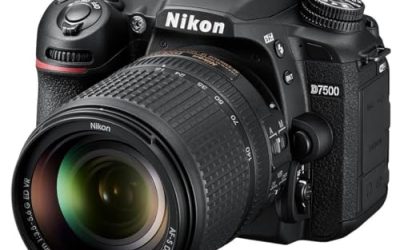
4. Nikon D780 DSLR with 24-120mm Kit Lens

The Nikon D780 is the DSLR in this guide, and it earns its place because it does things no mirrorless camera here can match. Its optical viewfinder shows the real world with zero lag and no power drain, and its battery lasts for thousands of shots per charge, which is several times what a mirrorless camera manages. For a wedding photographer or a traveler far from an outlet, that endurance is a real advantage.
Inside, the D780 borrows its sensor and image processor from the Z6, so image quality matches Nikon’s mirrorless cameras: a 24.5-megapixel full-frame sensor with clean high-ISO performance. In live view, it has the same on-sensor autofocus with eye detection as the Z cameras, so it can shoot like a mirrorless camera when you want it to. Through the viewfinder, its dedicated autofocus module is fast and reliable for action.
The included 24-120mm kit lens is a genuinely useful zoom, covering wide landscapes to short telephoto portraits in one lens, and the F-mount gives you access to decades of Nikon lenses. The D780 is larger and heavier than the Z cameras, and its video autofocus through the viewfinder is limited, but for a photographer who loves an optical viewfinder and wants a camera that never runs out of battery, the D780 is the best DSLR Nikon ever made.
Comparison at a Glance
| Camera | Sensor | Autofocus | Video | Best For |
|---|---|---|---|---|
| Nikon Z6 II | 24.5 MP | Eye detection, dual processors | 4K | All-round photography and video |
| Nikon Z5 | 24.3 MP | Eye detection | 4K with crop | Affordable full-frame entry |
| Nikon Z7 II | 45.7 MP | Eye detection, dual processors | 4K | Landscapes and high detail |
| Nikon D780 | 24.5 MP | Eye detection in live view | 4K | Optical viewfinder and battery life |
FAQ
Is full-frame worth it over a crop sensor?
For low-light shooting, shallow depth of field, and large prints, yes. A full-frame sensor gathers more light and produces cleaner high-ISO images. For daylight travel and general use, a crop sensor is lighter and cheaper, and the difference is smaller than marketing suggests.
Should I buy a Z camera or the D780 DSLR?
Buy a Z camera if you want the newest lenses, the best video, and eye-detection autofocus. Buy the D780 if you love an optical viewfinder, need extreme battery life, or already own F-mount lenses. Image quality is comparable between them.
Can I use my old Nikon F-mount lenses on a Z camera?
Yes, with Nikon’s FTZ adapter. Most autofocus F-mount lenses work well, though older manual lenses lose autofocus. Check compatibility for your specific lens before buying the adapter.
Do I need the highest resolution sensor?
Only if you print large, crop heavily, or shoot commercial work. A 24-megapixel sensor is enough for most photographers, and its files are smaller, faster to process, and better in low light.
What is the best first full-frame Nikon lens?
A 24-70mm standard zoom or a 50mm prime. The zoom covers the most situations, while the 50mm prime is light, fast, and teaches composition. The D780 kit’s 24-120mm lens is a good all-in-one alternative.
Conclusion
The best Nikon full frame cameras cover every kind of photographer. The Z5 is the affordable entry into full-frame, the Z6 II is the all-rounder that does everything well, the Z7 II is the detail king for landscapes and studio work, and the D780 is the DSLR for photographers who value an optical viewfinder and a battery that never quits. Choose the body that matches how you shoot, invest in good glass, and any of these cameras will serve you for years.
Disclosure: As an Amazon Associate, stanthonyscalgary.com earns from qualifying purchases.
Related guides
More from Amazon
Programs that pair well with the guide above. Offers and eligibility are set by Amazon and may change.
Free shipping on eligible items, Prime Video and more. Eligible new members can start with a free trial.
Start a Prime free trialAudiobooks and podcasts to listen to on the go. Eligible new members can start with a free trial.
Try Audible freeAd-free music streaming. Eligible new subscribers can start with a free trial.
Try Music Unlimited freeA free business account with business pricing and bulk-buying tools for work, shop or home office.
Create a business accountAs an Amazon Associate we earn from qualifying purchases.
Write Your Review
No reviews yet. Be the first to share your experience!