
Key takeaways
- Find the best intermediate cameras for sharper stills and 4K video. Compare three APS-C mirrorless models by sensor, autofocus, handling, and lens choice.
What's inside
As an Amazon Associate I earn from qualifying purchases. This post may contain affiliate links at no extra cost to you.
Moving beyond a phone or a basic camera brings a clear question: which body will grow with you without getting in the way? The best intermediate cameras sit in that middle ground. They give you manual control, a larger sensor, dependable autofocus, and room to learn, while staying light enough to carry on a walk, a trip, or a full day of shooting. This guide looks at three APS-C mirrorless models that fit that middle ground well: the Canon EOS R10, the Nikon Z50II, and the Sony Alpha a6700. Each one brings a different balance of handling, video ability, and lens choice, so the right pick depends on how you shoot, what you photograph most, and which system you want to build around over time.
At a glance
| Product | ASIN | Best for |
|---|---|---|
| Canon EOS R10 (Body Only) | B0B27NSHB4 | Action, wildlife, and fast-moving subjects |
| Nikon Z50II with 16-50mm Lens Kit | B0DMJJY4L3 | Everyday shooting, travel, and simple colour looks |
| Sony Alpha a6700 with 16-50mm Lens Kit | B0FLSXBHPB | Hybrid stills and video with strong subject tracking |
How to choose the best intermediate cameras
1. Sensor size and image quality
All three cameras in this guide use an APS-C sensor, which is larger than the sensor in most phones and compact cameras. A larger sensor gathers more light, helps keep detail in shadows and highlights, and gives you more control over background blur. Resolution matters less than many shoppers expect at this level. A 20.9-megapixel file prints large and crops well, while a 26-megapixel file gives a little more room to recompose. Look instead at how clean files look in low light and how much detail the sensor holds.
2. Autofocus that holds on
Intermediate photographers shoot people, pets, birds, and moving subjects more often than they expect. A camera with subject detection for people, animals, and vehicles makes that work easier, because the camera can find an eye or a face and hold focus while you compose. Check how many focus zones the system uses and whether eye detection works in both stills and video. The three models below all include modern subject detection, but they differ in how they present it and how much you can adjust it.
3. Burst shooting and buffer depth
Burst speed helps when a moment lasts only a second: a bird taking off, a child mid-jump, or a player at the peak of a move. A mechanical shutter burst of 11 to 15 frames per second is ample for most intermediate work, and an electronic shutter can go higher when silence matters. Also consider the buffer, which is how many shots the camera can hold before it slows down. A high burst number means little if the camera pauses after a short run, so match burst speed to the subjects you shoot most.
4. Video ability
Many intermediate photographers now record video as often as they take stills. Look for 4K recording, a clean frame-rate choice for slow motion, and a screen that flips out for self-recording. A camera that records 4K at 60 frames per second gives smoother motion and more room to slow a clip down, while Full HD at 120 frames per second suits simple slow-motion work. In-body stabilisation helps handheld clips, and a microphone input matters if you plan to record interviews or narration with care.
5. Handling, viewfinder, and screen
A camera you enjoy holding is a camera you will carry. Compare grip depth, button layout, menu design, and weight with a lens attached. An electronic viewfinder helps you judge exposure and focus in bright light, while a touch screen that flips out helps with low angles, high angles, and self-recording. Physical dials for shutter speed, aperture, and exposure compensation help you learn manual control by feel.
6. Lens system and future growth
A camera body is only half of the system. Before you choose, look at the lenses available in that mount: a compact zoom for travel, a bright prime for portraits and low light, and a telephoto zoom for wildlife. Canon RF-S, Nikon Z DX, and Sony E mounts each have a growing set of native lenses, plus third-party options that widen the choice further.
7. Battery life and storage
Mirrorless cameras use more battery than older DSLR designs, because the sensor and screen stay active while you shoot. A spare battery is a sensible companion for a long day or a trip. Check which memory card format the camera uses and how large the files are in RAW and in 4K video, since large files fill cards quickly.
Canon EOS R10 (Body Only)

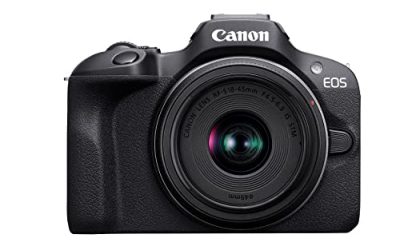
The Canon EOS R10 is a compact APS-C mirrorless body built around speed and approachable handling. It suits photographers who want to move from a phone or a basic camera to a system with real manual control, quick autofocus, and a deep Canon lens mount to grow into. This listing is for the body only, so you choose the lens that matches your subjects rather than accepting a kit zoom by default.
Key specifications
- 24.2-megapixel APS-C CMOS sensor
- DIGIC X image processor
- Dual Pixel CMOS AF II with up to 651 zones
- 15 frames per second with the mechanical shutter, 23 frames per second with the electronic shutter
- 4K video recording
- Native ISO range of 100 to 32000, expandable to 51200
- Canon RF lens mount
- Body weight of 382 grams
Strengths
The autofocus system is the headline here. Dual Pixel CMOS AF II covers nearly the full frame, finds people, animals, and vehicles, and holds on well when a subject moves across the scene. Burst shooting at 15 frames per second with the mechanical shutter gives you many chances to catch the peak of a move, and the RAW burst mode with half-second pre-shooting helps when a moment begins before you press the shutter. The 24.2-megapixel sensor delivers detailed files with pleasant Canon colour, and the compact body stays comfortable on a long walk.
Limitations
This listing includes the body only, so a lens is a separate choice and a separate part of the plan. The R10 has no in-body image stabilisation, so stabilisation depends on the lens you attach, which matters more for handheld video and for long telephoto work. Battery life is modest by mirrorless standards, so a spare battery belongs in the bag for a full day. The single card slot suits most intermediate work, but photographers who want a live backup copy in the camera will need to look at a higher model in the Canon range.
Who it suits
The R10 suits photographers who shoot action, wildlife, and family life, and who want Canon autofocus and Canon colour in a light, quick body. It also suits learners who want clear controls and a lens mount with room to grow, from a compact zoom to a long telephoto.
Nikon Z50II with 16-50mm Lens Kit

Nikon Z50II with 16-50mm Lens Kit
The Nikon Z50II is a friendly APS-C mirrorless camera that pairs a proven 20.9-megapixel sensor with the EXPEED 7 processor from higher Nikon bodies. It comes in this listing with the NIKKOR Z DX 16-50mm f/3.5-6.3 VR lens, a slim retractable zoom that covers wide-angle to short telephoto views. That combination makes it an easy camera to pick up for travel, everyday life, portraits, and street photography, with colour looks and automatic modes that help while you learn manual control.
Key specifications
- 20.9-megapixel DX-format APS-C CMOS sensor
- EXPEED 7 image processor
- UHD 4K video at up to 60 frames per second
- Full HD video at up to 120 frames per second
- Subject detection for people, birds, dogs, cats, cars, bicycles, motorcycles, trains, and airplanes
- NIKKOR Z DX 16-50mm f/3.5-6.3 VR lens included in this kit
- Flip-out touch screen and bright electronic viewfinder
- Nikon Z lens mount
Strengths
The Z50II feels calm and welcoming in the hand, with a deep grip, clear menus, and an intelligent automatic mode that reads a scene and chooses sensible settings while you learn. Colour looks built into the camera give stills and video a distinct feel without extra editing. Subject detection covers nine subject types, so the camera can find a bird, a pet, or a vehicle as readily as a person. Video is strong for the class, with 4K at 60 frames per second, Full HD slow motion at 120 frames per second, and electronic stabilisation for handheld clips. The 16-50mm kit lens keeps the whole package compact enough to carry all day.
Limitations
The 20.9-megapixel sensor gives less room to crop than the 26-megapixel sensors in the other two cameras here, so photographers who crop heavily for wildlife or distant subjects should weigh that carefully. The kit lens is compact and convenient, but its variable aperture limits low-light work and background blur compared with a bright prime. The camera has a single card slot, and its burst depth is more modest than the Canon R10, so it suits deliberate shooting more than long high-speed runs. Like most cameras in this class, it benefits from a spare battery on a long day of travel.
Who it suits
The Z50II suits travel photographers, everyday shooters, and learners who want a camera that feels good and produces pleasing colour with little fuss. It also suits content creators who want 4K video, a flip-out screen, and simple colour looks in one compact kit.
Sony Alpha a6700 with 16-50mm Lens Kit

Sony Alpha a6700 with 16-50mm Lens Kit
The Sony Alpha a6700, model ILCE6700K/B, is the most video-capable camera in this guide and one of the strongest hybrid bodies at the intermediate level. It pairs a 26-megapixel APS-C sensor with the BIONZ XR processor and a dedicated AI processing unit for subject recognition. This listing includes the Sony E PZ 16-50mm f/3.5-5.6 OSS II zoom lens, a compact power zoom that suits travel, vlogging, and everyday shooting. It is a strong pick for photographers who split their time evenly between stills and video.
Key specifications
- 26-megapixel APS-C Exmor R CMOS sensor
- BIONZ XR image processor with dedicated AI processing unit
- AI-based subject recognition with eye, face, and phase detection
- 4K video recording, with 4K at 60 frames per second and 4K at 120 frames per second in the wider specification set
- 10-bit 4:2:2 video recording
- 5-axis in-body image stabilisation
- Up to 11 frames per second continuous stills shooting
- Sony E PZ 16-50mm f/3.5-5.6 OSS II lens included in this kit
- 3-inch articulating touch screen
- Sony E lens mount
Strengths
Subject recognition is the a6700’s clearest strength. The AI processing unit helps the camera find and hold people, animals, birds, insects, cars, trains, and airplanes with a steadiness that suits both stills and video. The 26-megapixel sensor delivers detailed stills with good low-light behaviour, and 5-axis in-body stabilisation helps handheld stills and video alike. Video makers gain 10-bit 4:2:2 recording, log shooting, and LUT handling, which give more room to shape colour and tone in editing. The Sony E mount is the widest lens system in this guide, with a deep set of native and third-party lenses.
Limitations
The menu system is deep, and newcomers may need time to learn where each setting lives, even with the touch interface and custom buttons. The 16-50mm kit lens is convenient and compact, but it is not the sharpest lens in the Sony system, so photographers who want the full benefit of the 26-megapixel sensor should plan for a higher-quality lens later. Battery life is workable rather than generous when recording long video clips, so a spare battery and a clear charging routine help. The single card slot is common at this level, but it means no in-camera backup copy while you shoot.
Who it suits
The a6700 suits hybrid shooters who want one camera for stills and video, with subject tracking they can trust and video tools that leave room to grow. It also suits travel photographers who want a compact body, in-body stabilisation, and access to the broad Sony E lens system.
Comparison table
| Camera | Sensor | Autofocus highlight | Video highlight | Kit lens |
|---|---|---|---|---|
| Canon EOS R10 (Body Only) | 24.2 MP APS-C | Dual Pixel CMOS AF II, 651 zones | 4K video | None in this listing; body only |
| Nikon Z50II | 20.9 MP APS-C | Subject detection for 9 subject types | 4K at 60 fps, Full HD at 120 fps | NIKKOR Z DX 16-50mm f/3.5-6.3 VR |
| Sony Alpha a6700 | 26 MP APS-C | AI-based subject recognition | 4K at 60 fps, 10-bit 4:2:2 | Sony E PZ 16-50mm f/3.5-5.6 OSS II |
When you compare the three side by side, the differences are about emphasis rather than quality. The Canon R10 leads on burst speed and on quick, confident autofocus for action. The Nikon Z50II leads on approachable handling, pleasing colour looks, and a compact travel kit. The Sony a6700 leads on hybrid ability, with the strongest subject recognition, in-body stabilisation, and the deepest video tool set. Choose by the work you do most: action points to Canon, everyday travel points to Nikon, and a stills-and-video mix points to Sony.
Frequently asked questions
What makes a camera an intermediate camera?
An intermediate camera sits between a basic camera and a top professional body. It gives you manual control over shutter speed, aperture, and ISO, a larger APS-C or full-frame sensor, dependable autofocus with subject detection, and 4K video, without the size, weight, or complexity of a flagship body. It also gives you room to learn: you can begin in automatic modes, move to aperture or shutter priority, and then shoot fully manual when you are ready.
Is APS-C enough for intermediate photography?
Yes, for most intermediate work. An APS-C sensor delivers detailed stills, good low-light behaviour, and pleasant background blur, while keeping bodies and lenses smaller and lighter than full-frame equivalents. Full-frame cameras gather more light and give shallower depth of field, but they also bring larger lenses and a heavier bag.
Should I buy a body only or a kit with a lens?
A kit with a lens is the simpler path when you are moving up from a phone or a basic camera, because you can shoot from day one with a compact zoom that covers many situations. A body-only listing suits photographers who already own a lens in that mount, or who know exactly which lens they want for their main subject. If you choose body only, plan the lens at the same time, so the camera does not sit unused while you decide.
Which of these three cameras is best for video?
The Sony a6700 is the strongest video choice in this guide, with AI subject recognition, in-body stabilisation, 10-bit 4:2:2 recording, and log shooting for colour work in editing. The Nikon Z50II follows closely, with 4K at 60 frames per second, Full HD slow motion, and a flip-out screen in a friendly body. The Canon R10 also records 4K video with dependable autofocus, and it suits video makers who already work in the Canon system.
Conclusion
The best intermediate cameras give you room to grow without asking you to master everything at once. The Canon EOS R10 brings speed and confident autofocus for action and wildlife. The Nikon Z50II brings friendly handling, pleasing colour, and a compact travel kit for everyday shooting. The Sony Alpha a6700 brings the strongest hybrid balance, with AI subject recognition, in-body stabilisation, and video tools that grow with your skills. Match the camera to the work you do most, check the lens system you want to build around, and choose the body you will actually carry.
Disclosure: As an Amazon Associate, we may earn a commission from qualifying purchases made through links in this article, at no extra cost to you.
Related guides
More from Amazon
Programs that pair well with the guide above. Offers and eligibility are set by Amazon and may change.
Free shipping on eligible items, Prime Video and more. Eligible new members can start with a free trial.
Start a Prime free trialAudiobooks and podcasts to listen to on the go. Eligible new members can start with a free trial.
Try Audible freeAd-free music streaming. Eligible new subscribers can start with a free trial.
Try Music Unlimited freeA free business account with business pricing and bulk-buying tools for work, shop or home office.
Create a business accountAs an Amazon Associate we earn from qualifying purchases.
Write Your Review
No reviews yet. Be the first to share your experience!