
Key takeaways
- Find the best sewer cameras for drain inspection, with long cables, waterproof heads, LED lights and large screens to see blockages clearly on the job.
What's inside
As an Amazon Associate I earn from qualifying purchases. This post may contain affiliate links at no extra cost to you.
The best sewer cameras let the operator see inside a drain without digging it up. A slow drain, a bad smell or a recurring blockage can have many causes: tree roots, a collapsed pipe, a fat blockage, a broken joint or a foreign object. Guessing wastes time and money, while a camera shows the fault directly, including how far into the pipe it sits and how bad it is. That picture is what turns a vague problem into a clear repair plan.
A sewer camera is a small waterproof camera head on the end of a long, semi-rigid cable, with LED lights to illuminate the inside of the pipe and a screen to show the live picture. The cable is pushed through the pipe from a cleanout or a drain opening, and the operator watches the screen as the head moves, looking for cracks, roots, standing water and blockages. The cable length decides how far the camera can reach, the head size decides which pipes it can enter, and the screen size decides how clearly the operator can read the picture on site.
This guide compares three verified sewer cameras listed on Amazon US, all of the same type: drain pipe inspection cameras with a cable, a waterproof head and a screen. No security camera or borescope is listed here, because the keyword is about sewer cameras, and mixing another type would break the same-type rule. Each camera is described with the cable length, screen and head details from its listing.
What to Look For
Cable length. Cable length decides how far the camera can reach. A 100-foot cable covers a long drain run from a cleanout, while a shorter cable stops short of a distant blockage.
Camera head size. The head must fit the pipe. A head that is too large cannot enter a narrow pipe, while a head that is too small can be hard to control. Check the pipe diameter before ordering.
Waterproofing. The camera head works in standing water, so it must be waterproof. The head and the cable should both be built for wet, dirty conditions, and they should be cleaned after each job.
LED lights. A pipe interior has no light, so the camera head needs LED lights. Bright, even lighting shows cracks and roots clearly, while dim lights leave the picture dark and unreadable.
Screen size. The screen is what the operator watches all day. A 9-inch screen shows pipe details clearly on site, while a small screen forces the operator to squint or to record and check later.
Cable stiffness. The cable must be stiff enough to push around bends and flexible enough to follow the pipe. A cable that is too soft folds back on itself, while a cable that is too stiff cannot turn a bend.
Recording. Recording the inspection lets the operator show the customer the fault and keep a record of the pipe condition. Check whether the camera records to a card or only shows a live picture.
Cleaning and care. A drain camera gets dirty on every job. The cable and head should be easy to clean and dry, because grit left on the cable wears the head and shortens the life of the kit.
Top Picks
VEVOR Sewer Camera, 98ft Drain Inspection Camera with 9-Inch Screen, Waterproof Camera Head, LED Lights

The VEVOR sewer camera is a drain inspection camera with a 98-foot cable, a 9-inch screen and a waterproof camera head with LED lights. The 98-foot cable is the number that decides which jobs this camera can do: it reaches from a cleanout to a distant blockage or a far section of pipe, where a shorter cable would stop short and leave the problem unseen. The 9-inch screen is large enough to read pipe details on site without squinting at a phone, and it shows the live feed as the cable is fed through the pipe, so the operator can see cracks, roots, blockages and standing water in real time. The waterproof camera head carries LED lights that illuminate the inside of a dark pipe, which is essential, because a pipe interior has no light of its own. The cable is semi-rigid, so it can be pushed around bends while still holding its shape, and the whole kit is built for repeated use on real jobs rather than a single look. The camera head diameter matters for narrow pipes, so the pipe size should be checked against the head before ordering, and the cable needs to be cleaned and dried after use in a drain. For a homeowner or a tradesperson who needs to see inside a long drain run, the VEVOR with its 98-foot reach and large screen is the most capable inspection camera in this group.
For a long drain run with a clear picture, the VEVOR is the most capable camera here: a 98-foot cable, a 9-inch screen and a waterproof head with LED lights.
SYANSPAN Sewer Camera, 100ft Drain Pipe Inspection Camera with Screen, Waterproof Camera Head, LED Lights

The SYANSPAN sewer camera is a drain pipe inspection camera with a 100-foot cable, a screen and a waterproof camera head with LED lights. The 100-foot cable gives the longest reach in this group, which matters when a blockage sits far from the nearest access point or when a long run of pipe needs to be checked in one pass. The camera head is waterproof and carries LED lights, so it can travel through standing water in a drain and still show the pipe walls clearly, and the screen shows the live picture as the cable moves, letting the operator spot roots, cracks, collapsed sections and blockages without guessing. The cable is firm enough to push through bends yet flexible enough to follow the pipe, which is the balance a drain camera has to strike. A long cable also needs care in use: it should be fed steadily rather than forced, and it should be cleaned after each job so that grit does not wear the camera head or the cable. The screen is the part the operator watches all day, so a clear, bright display matters more than extra features on a drain job. For a long drain run where reach is the deciding factor, the SYANSPAN with its 100-foot cable is the longest-reaching camera here.
For the longest reach, the SYANSPAN is the pick: a 100-foot cable with a waterproof head and LED lights for checking a distant blockage in one pass.
VisionProbe Sewer Camera, Drain Pipe Inspection Camera with Screen, Waterproof Camera Head
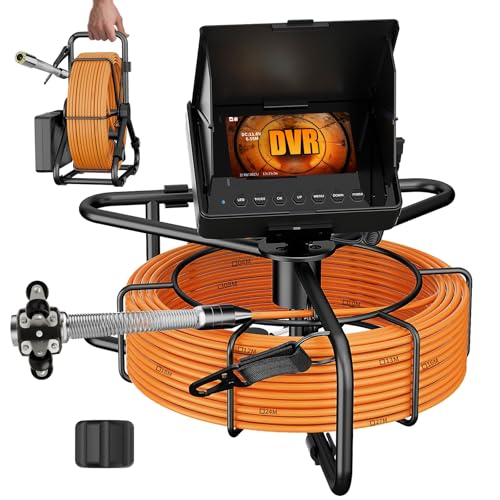
The VisionProbe sewer camera is a drain pipe inspection camera with a waterproof camera head and a screen for live viewing. Like the other cameras in this group, it is built for one job: sending a small camera into a pipe and showing what is inside, so that a blockage, a crack or a root intrusion can be found without digging. The waterproof head lets the camera travel through water sitting in a drain, and the built-in lights illuminate the pipe interior so the picture stays readable in the dark. The screen shows the live feed as the cable is fed forward, which lets the operator see the problem as it appears and judge how far into the pipe it sits. A drain camera of this type is used by homeowners tracing a slow drain and by tradespeople confirming a diagnosis before quoting a repair, and in both cases the value is the same: seeing the fault is faster and cheaper than opening a pipe to look for it. Before ordering, the pipe diameter should be checked against the camera head size, because a head that is too large cannot enter a narrow pipe, and the cable length should match the distance from the access point to the far end of the run. The listing for this model gives fewer published specifications than the other two cameras here, so buyers should confirm cable length and screen size on the listing itself. For a straightforward inspection camera at a simpler level, the VisionProbe covers the essential job.
For a straightforward inspection camera, the VisionProbe covers the essential job: a waterproof head, built-in lights and a screen for live viewing inside a drain.
Comparison at a Glance
| Product | Cable | Screen | Head |
|—|—|—|—||
| VEVOR sewer camera | 98ft cable | 9-inch screen | Waterproof head, LED lights |
| SYANSPAN sewer camera | 100ft cable | Screen included | Waterproof head, LED lights |
| VisionProbe sewer camera | Cable length on listing | Screen included | Waterproof head |
How to Use a Sewer Camera on a Drain Job
A sewer camera job starts before the camera goes in. The access point should be found first, usually a cleanout, and the pipe size and the distance to the suspected fault should be estimated. The camera head should be checked against the pipe size, the lights should be tested, and the screen should be checked for a clear picture before the cable is fed in. The cable should be fed steadily and slowly, watching the screen the whole time, because pushing too fast can miss a crack or a root that only shows for a second. When the fault appears, the cable should be stopped and the picture studied: the shape of the blockage, the condition of the pipe walls, and any standing water all say something about the cause. The distance can be judged from the length of cable fed in, which tells the operator where to dig or where to cut. After the job, the cable and head should be pulled out slowly, cleaned with water and a cloth, and dried before storage, because drain residue left on the cable wears the head and the cable over time.
It also helps to record the inspection when the camera supports it. A recording lets the customer see the fault with their own eyes, which makes a repair quote far easier to accept, and it gives a record of the pipe condition for the next visit. If the camera has no recording function, a phone photo of the screen at the fault is a useful substitute. The operator should also note the depth and the location of the fault, because that information decides whether the repair is a simple clean, a patch, or a full pipe replacement.
Frequently Asked Questions
What is the best sewer camera for home use?
For a home drain run, the VEVOR sewer camera in this guide is the most capable pick: a 98-foot cable, a 9-inch screen and a waterproof head with LED lights, which covers most residential drain runs.
How long a cable do I need for a sewer camera?
It depends on the distance from the access point to the far end of the drain. A 98 or 100-foot cable covers most residential runs, while a shorter cable is enough for a drain close to the cleanout.
Can a sewer camera find tree roots in a pipe?
Yes. Tree roots show clearly on a sewer camera as pale, fibrous growths entering through a joint or a crack, and the camera shows how far the roots have spread inside the pipe.
Is a sewer camera head waterproof?
Yes. The camera heads in this guide are waterproof, so they can travel through standing water in a drain. The cable and head should still be cleaned and dried after each job.
What size pipe can a sewer camera enter?
It depends on the camera head size. Check the pipe diameter against the head size on the listing before ordering, because a head that is too large cannot enter a narrow pipe.
Conclusion
The best sewer cameras show the fault instead of guessing at it. The VEVOR gives the clearest on-site picture with its 98-foot cable and 9-inch screen, the SYANSPAN gives the longest reach at 100 feet, and the VisionProbe covers the essential inspection job at a simpler level. Check the pipe size against the head, feed the cable steadily, and clean the kit after every job.
Disclosure: As an Amazon Associate, stanthonyscalgary.com earns from qualifying purchases.
Related guides
More from Amazon
Programs that pair well with the guide above. Offers and eligibility are set by Amazon and may change.
Free shipping on eligible items, Prime Video and more. Eligible new members can start with a free trial.
Start a Prime free trialAudiobooks and podcasts to listen to on the go. Eligible new members can start with a free trial.
Try Audible freeAd-free music streaming. Eligible new subscribers can start with a free trial.
Try Music Unlimited freeA free business account with business pricing and bulk-buying tools for work, shop or home office.
Create a business accountAs an Amazon Associate we earn from qualifying purchases.
Write Your Review
No reviews yet. Be the first to share your experience!