
Key takeaways
- Compare the best inexpensive digital cameras for everyday photos at home, with compact zoom models, simple controls and solid image quality for beginners.
What's inside
As an Amazon Associate I earn from qualifying purchases. This post may contain affiliate links at no extra cost to you.
The best inexpensive digital cameras prove that a dedicated camera still has a place beside a phone. A phone is convenient, but a small digital camera gives a real zoom lens, a proper grip, a shutter button under one finger and a sensor tuned for still photos, all in a body that slips into a pocket. For family photos, holidays, school events and everyday moments, a simple compact camera often takes a better picture than a phone, because the lens and the controls are built for photography first.
Shopping for a low-cost camera is mostly about knowing what to give up and what to keep. A camera in this class will not match a large-sensor camera in dim light, and it will not focus as fast as a flagship phone. What it should give is a useful zoom range, enough resolution for prints and cropping, simple automatic modes, and a body that is actually carried rather than left at home. The cameras in this guide were chosen because they meet those basics while staying in the inexpensive class.
This guide compares four verified cameras listed on Amazon US, with the sensor size, zoom range and video ability taken from each listing. Each camera is judged on how it fits everyday use: how far the zoom reaches, how simple the controls feel, and how the photos look in daylight, which is where these cameras spend most of their time.
What to Look For
Sensor resolution. A 16 to 20 megapixel sensor gives enough detail for large prints and for cropping a photo to a tighter frame afterwards. More megapixels help, but on a small sensor they matter less than a good lens and steady handling.
Zoom range. Optical zoom is the real zoom: the lens itself moves. A 4x or 5x zoom covers everyday scenes, while a 12x zoom reaches distant subjects. Digital zoom only crops the picture, so it should not be counted as zoom.
Wide-angle starting point. A lens that starts at 27 or 28mm fits a whole group or a room into the frame without stepping back. This matters more than the long end for family photos taken indoors.
Video ability. Most compacts record Full HD 1080p video, which is enough for short clips shared with family. Check the listed video resolution before ordering, because a few older models record only HD.
Simplicity. Automatic modes should handle exposure and focus without menu diving. A beginner camera should be usable on the first day, with scene modes for the occasions when automatic needs help.
Size and weight. A compact camera only earns its place if it is carried. A pocket-sized body with a wrist strap is far more useful than a slightly better camera that stays in a drawer.
Battery and storage. Some compacts use AA batteries, which can be replaced anywhere, while others use a rechargeable pack. Either way, a memory card is needed, and a spare card or battery is worth carrying on a day out.
Low-light limits. Small sensors show grain in dim rooms. Expect the best results outdoors and in well-lit rooms, and treat the built-in flash as a short-range helper rather than a solution for dark scenes.
Top Picks
KODAK PIXPRO FZ55-BK 16MP Digital Camera with 5X Optical Zoom and 1080p Video (Black)
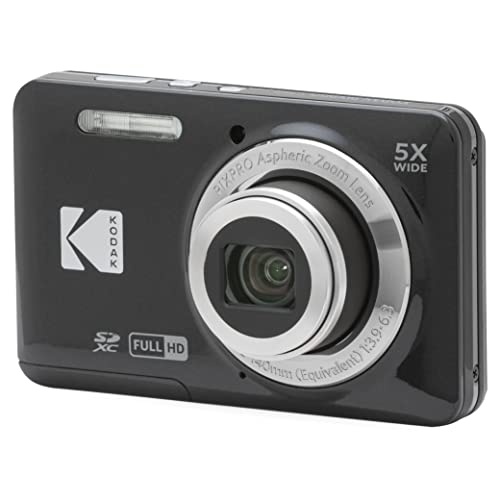
The KODAK PIXPRO FZ55 is a compact point-and-shoot camera built around a 16-megapixel sensor and a 5x optical zoom lens, recording Full HD 1080p video. The combination is aimed squarely at everyday photography: family gatherings, holidays, school events and walks where a phone stays in a pocket and a dedicated camera does the work. The 5x zoom reaches noticeably further than a phone camera, which helps with subjects across a room or across a street, while the compact body slips into a jacket pocket or a small bag without a camera strap digging into a shoulder. Controls are kept simple, with automatic modes doing most of the thinking, so a beginner can pick the camera up and start taking usable photos without reading a manual first. The 16-megapixel resolution gives enough detail for large prints and for cropping a photo to a tighter frame afterwards, and the 1080p video covers short clips for sharing with family. As with any small-sensor compact, low light is the weak point: indoor evening shots and dim rooms will show more grain than daylight shots, and the built-in flash only reaches a short distance. A memory card is needed for storage, and it is worth carrying a spare, because a full card ends a day out. For someone who wants a simple, light camera for daylight photos and short video clips, the FZ55 covers the basics without demanding any photography knowledge.
For everyday photos, the FZ55 is the simplest starting point here: a light pocket camera with a 5x zoom and 1080p video for daylight shooting.
KODAK PIXPRO Friendly Zoom FZ45-BK 16MP Digital Camera with 4X Optical Zoom, 27mm Wide Angle and 2.7-inch LCD Screen (Black)

The KODAK PIXPRO FZ45 is a 16-megapixel point-and-shoot camera with a 4x optical zoom lens that starts at a 27mm wide angle, a 2.7-inch LCD screen on the back, and Full HD 1080p video recording. The 27mm wide end is the feature that shapes how the camera is used: it fits a whole group of people, a room interior or a landscape into the frame without stepping backwards, which is exactly what a family camera needs to do. The 4x zoom then reaches far enough for a child on a stage or a building across a square, and the 2.7-inch screen is large enough to check framing and to show a photo to the people in it. The camera runs on AA batteries, which is a practical detail for travel: when the batteries run down, a fresh pair can be bought almost anywhere instead of waiting for a charger. The 16-megapixel sensor gives enough detail for prints and for cropping, and the 1080p video handles short clips of birthdays and holidays. Image quality is best in daylight, and dim indoor scenes will look softer with more visible grain, as is normal for a compact camera in this class. The body is light and pocketable, the controls are automatic-first, and the whole camera is designed to be picked up and used rather than studied. For a first digital camera, a gift, or a simple travel companion, the FZ45 is one of the most straightforward options here.
For family photos, the FZ45 is the friendlier choice: a 27mm wide angle for group shots, AA batteries for travel, and a clear 2.7-inch screen.
Canon PowerShot ELPH 360 HS 20.2MP Digital Camera with 12x Optical Zoom (Black)
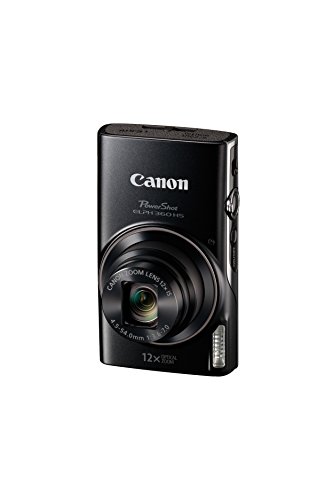
The Canon PowerShot ELPH 360 HS pairs a 20.2-megapixel sensor with a 12x optical zoom lens, which is the longest reach of any camera in this group. That zoom range changes what the camera can do on a day out: a 12x lens pulls in distant architecture, wildlife at the far side of a park, and details on a stage that a shorter zoom simply cannot reach, while the wide end still covers group photos and street scenes. The 20.2-megapixel sensor gives generous detail for prints and for cropping into a photo after it is taken, and the HS system is designed to keep image quality steady in lower light, where small cameras usually struggle most. The ELPH 360 is a slim, pocket-sized body, so it travels in a jacket pocket and comes out only when a photo is wanted, which is the whole point of a compact camera in a phone era. It records Full HD video, and its wireless connection moves photos to a phone for sharing without a cable. The trade-offs are the usual ones for a slim compact: the small sensor shows grain in dim rooms, the zoom is slower than a larger lens, and there is no viewfinder, so bright sunlight can make the rear screen hard to see. Note that this model is also listed by third-party sellers under several listings, so the ASIN in this article should be checked against the exact model name on the listing before ordering. For a buyer who wants the most zoom in the smallest body here, the ELPH 360 is the pick.
For reach, the ELPH 360 is the standout: a 12x zoom and a 20.2-megapixel sensor in the slimmest body in this group.
Sony Cyber-shot DSC-W800 20.1MP Digital Camera with 5x Optical Zoom (Black)

The Sony Cyber-shot DSC-W800 is a compact camera with a 20.1-megapixel sensor and a 5x optical zoom lens, built for simple everyday photography. The 5x zoom covers the range most people use most often, from a wide group shot to a closer portrait or a detail across a room, and the 20.1-megapixel sensor records enough detail for large prints and for cropping a photo to a better composition later. The camera is small and light, with a clean, uncluttered body that fits a pocket or a small bag, and its automatic modes handle exposure and focus so the user can concentrate on the subject rather than the settings. A party mode and a panorama mode are included for the occasions when a plain snapshot is not enough, and the camera records HD video for short clips. Battery life is reasonable for a day of casual shooting, and a spare memory card is the only extra most buyers will need. Image quality is at its best outdoors and in well-lit rooms; like every compact in this class, the W800 shows more grain in dim light and its small flash only lights nearby subjects. There is no wireless transfer in this model, so photos move to a computer through a cable or a card reader, which is worth knowing for anyone used to sending photos straight from a phone. For a buyer who wants the simplest possible camera with a solid sensor and a useful zoom, the W800 is a dependable, no-fuss choice.
For pure simplicity, the W800 is the no-fuss pick: a 20.1-megapixel sensor, a 5x zoom and automatic modes that just work.
Comparison at a Glance
| Product | Sensor | Zoom | Video and extras |
|—|—|—|—||
| KODAK PIXPRO FZ55 | 16MP | 5x optical zoom | 1080p video |
| KODAK PIXPRO FZ45 | 16MP | 4x optical zoom, 27mm wide | 1080p video, 2.7-inch screen |
| Canon ELPH 360 HS | 20.2MP | 12x optical zoom | 1080p video, wireless transfer |
| Sony DSC-W800 | 20.1MP | 5x optical zoom | HD video, panorama mode |
How to Get Good Photos from a Low-Cost Camera
A low-cost camera takes its best photos in good light, so the single biggest improvement is to shoot outdoors or near a window whenever possible. Hold the camera with both hands, brace the elbows against the body, and press the shutter button halfway to lock focus before taking the shot. That pause is what keeps photos sharp, and it costs nothing. Use the wide end of the zoom indoors, where space is tight, and save the long end for outdoor subjects. Keep the lens clean, because a fingerprint on a small lens softens every photo, and check the memory card before leaving home. For video, pan slowly and keep clips short, since a compact camera has no stabilisation to hide fast movement. With those habits, a camera in this class produces photos that look clean, colourful and sharp in daylight, which is where most family photography happens.
It also helps to know when to leave the camera in automatic mode. The automatic modes on these cameras are tuned for everyday scenes, and they handle exposure well in daylight. Scene modes for portraits, landscapes and night shots adjust the settings for those situations, and they are worth trying before moving to manual controls. The flash should be used sparingly: it lights nearby faces but flattens the scene, so a photo taken near a window without flash usually looks more natural than the same photo with flash. When a photo comes out too dark indoors, moving closer to a lamp or a window helps more than any setting change.
Frequently Asked Questions
What is the best inexpensive digital camera for beginners?
A simple point-and-shoot with automatic modes, such as the KODAK PIXPRO FZ45 or the Sony DSC-W800 in this guide, is the easiest start. Both have a useful zoom, a clear screen and controls that need no photography knowledge.
Is a cheap digital camera better than a phone camera?
For zoom and for holding the camera steady, yes. A real optical zoom reaches further than a phone, and a dedicated grip and shutter button make framing easier. In very dim light, a modern phone can still do better.
How many megapixels do I need in a low-cost camera?
Sixteen to twenty megapixels is plenty for prints and for cropping. More megapixels on a small sensor do not add as much as a good lens and steady handling.
Do these cameras need a memory card?
Yes. None of these cameras has enough internal storage for a day of photos, so a memory card is needed, and a spare card is useful on holidays.
Can inexpensive digital cameras record video?
Yes. The cameras in this guide record Full HD 1080p video or HD video, which is enough for short clips shared with family and friends.
Conclusion
The best inexpensive digital cameras are the ones that are carried, used and understood. The KODAK PIXPRO FZ55 and FZ45 cover simple everyday photography, the Sony DSC-W800 adds a strong sensor with no fuss, and the Canon ELPH 360 HS gives the longest zoom in the smallest body. Pick the camera that matches the photos most often taken, check the exact model on the listing before ordering, and keep a spare memory card in the bag.
Disclosure: As an Amazon Associate, stanthonyscalgary.com earns from qualifying purchases.
Related guides
More from Amazon
Programs that pair well with the guide above. Offers and eligibility are set by Amazon and may change.
Free shipping on eligible items, Prime Video and more. Eligible new members can start with a free trial.
Start a Prime free trialAudiobooks and podcasts to listen to on the go. Eligible new members can start with a free trial.
Try Audible freeAd-free music streaming. Eligible new subscribers can start with a free trial.
Try Music Unlimited freeA free business account with business pricing and bulk-buying tools for work, shop or home office.
Create a business accountAs an Amazon Associate we earn from qualifying purchases.
Write Your Review
No reviews yet. Be the first to share your experience!