
Key takeaways
- Find the best digital cameras for tweens with simple controls, durable builds, and real photo quality. Compare three point-and-shoot picks for ages 9 to 12.
As an Amazon Associate I earn from qualifying purchases. This post may contain affiliate links at no extra cost to you.
Finding the best digital cameras for tweens is about balance. A tween, usually between 9 and 12 years old, is old enough to care about real photo quality and to learn basic composition, yet still young enough to need a camera that forgives drops, survives a backpack, and never buries the shutter button under three layers of menus. The right first camera should feel like a tool, not a toy, while staying simple enough that a young photographer can pick it up and start shooting within minutes of opening the box.
A dedicated point-and-shoot camera also teaches something a phone cannot. With no apps, no notifications, and no social feed attached, the camera itself becomes the focus. Tweens learn to frame a shot, wait for the right light, and think about what is in the frame before pressing the shutter. That slower, more deliberate way of shooting builds real photography skills, and it keeps the experience centered on creativity rather than screen time.
The three cameras below are all real digital point-and-shoot cameras with optical zoom lenses, rechargeable or standard batteries, and memory card storage. Each one is compact, light, and straightforward to operate, which is exactly what a first camera for a 9 to 12 year old should be. They differ in zoom range, sensor resolution, battery style, and wireless features, so the comparison further down this page will help you match a camera to the way your tween likes to shoot.
What to Look For
1. Simple, forgiving controls
A tween camera should have a clear auto mode that handles exposure and focus on its own. Look for a large shutter button, a simple mode dial or a small set of scene modes, and menus written in plain language. If a camera needs a manual to take a first photo, it is too complicated for a beginner.
2. A durable, pocket-friendly build
Tweens carry cameras in backpacks, jacket pockets, and beach bags. A compact body with a solid feel, a lens that retracts fully when powered off, and a wrist strap in the box will survive daily life far better than a bulky or fragile body. A protective case is a smart companion purchase, but the camera itself should already feel sturdy in small hands.
3. Real sensor resolution
Sensor resolution, measured in megapixels, sets the ceiling for how much detail a photo can hold and how large it can be printed or cropped. For a tween, a 16 to 20 megapixel sensor is a comfortable range. It captures plenty of detail for school projects, family trips, and prints, without producing enormous files that fill a memory card after one afternoon.
4. Optical zoom, not digital zoom
Optical zoom moves the lens glass to bring a subject closer, while digital zoom simply enlarges the middle of the image and throws detail away. A camera with 4x to 12x optical zoom gives a tween real reach for sports days, wildlife, and stage performances. Treat digital zoom as a backup, not a headline feature.
5. Battery style that fits your household
Some compact cameras use a rechargeable lithium-ion battery pack with a dedicated charger, while others run on standard AA batteries. Rechargeable packs are lighter and cheaper over time, while AA batteries can be swapped in seconds at a shop anywhere in the world. Neither choice is wrong, but it is worth knowing which one you are buying before the first trip.
6. A screen that is easy to see outdoors
Most modern point-and-shoot cameras rely on a rear LCD screen instead of a viewfinder. A 2.7 to 3.0 inch screen is a good size for small hands, and a bright display makes framing far easier in sunlight. A screen with a wide viewing angle also helps when a tween holds the camera up high or down low for a creative angle.
7. Video capability for school and fun
Many tweens want to film as well as photograph, whether for a school project, a hobby channel, or clips of friends. Full HD 1080p video is the sweet spot for a first camera: it looks crisp on a television or laptop, and the files stay manageable. Built-in image stabilization helps video stay smooth when filming while walking.
8. Memory card storage and easy file transfer
Every camera in this guide stores photos on a removable SD memory card, which makes it easy to move images to a computer or hand a full card to a parent for safekeeping. Some models add Wi-Fi or NFC for wireless transfer to a phone or tablet, which is convenient, but a card reader and a USB cable will always work, even with no wireless network in sight.
Top Picks
1. KODAK PIXPRO FZ55-BK 16MP Digital Camera
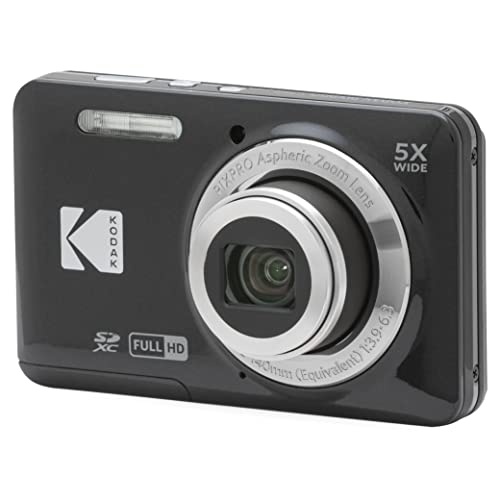
The KODAK PIXPRO FZ55-BK is a friendly first camera that gets the basics right. Its 16 megapixel CMOS sensor pairs with a 5x optical zoom lens that starts at a 28mm wide angle, which is wide enough for group photos and landscapes, and reaches far enough to pull in a subject across a school field. Full HD 1080p video lets a tween record school plays and holiday clips, and the 2.7 inch LCD screen on the back is large enough to frame shots comfortably and to show friends the results right away.
What makes the FZ55 a strong match for tweens is how little it asks of its owner. Auto scene detection, face detection, and a straightforward menu system mean a young photographer can concentrate on what to photograph instead of how to operate the camera. The camera runs on a rechargeable battery, so there are no disposable batteries to keep buying, and its slim body slips easily into a jacket pocket or a small bag. The black finish looks like a serious camera rather than a toy, which matters to a tween who wants to be taken seriously as a photographer.
There are a few practical points to keep in mind. A memory card is essential, since the camera has very little internal storage, and a protective case is worth adding for backpack duty. The 5x zoom is generous for everyday shooting but shorter than the reach of the Canon pick below, so tweens who mostly photograph distant subjects may prefer more zoom. For everyday photography, family trips, and learning the craft, however, the FZ55 is a dependable and approachable starting point.
2. KODAK PIXPRO Friendly Zoom FZ45-BK 16MP Digital Camera

The KODAK PIXPRO Friendly Zoom FZ45-BK takes a deliberately simple approach, and that simplicity is its greatest strength for a young beginner. It carries the same 16 megapixel sensor as its sibling, the FZ55, with a 4x optical zoom lens starting at a 27mm wide angle and a 2.7 inch LCD screen. Full HD 1080p video is on board, along with the same auto scene and face detection features that let a tween point, shoot, and get a good result on the first try.
Where the FZ45 stands apart is its power source. It runs on two standard AA batteries, which means a tween never has to wait for a battery to charge before heading out. A fresh pair of batteries from any shop restores the camera to full readiness in seconds, which is a real advantage on holidays, school trips, and camping weekends far from a power outlet. Parents often appreciate this too, since there is no charger to pack and no battery pack to lose.
The trade-off is that AA batteries add a little weight and need replacing more often than a rechargeable pack, so keeping a spare pair in the camera bag is a sensible habit. The 4x zoom is also a step shorter than the FZ55, so this camera suits tweens who photograph friends, pets, and nearby scenes more than distant action. As a first camera for a younger tween, or for a family that values grab-and-go simplicity above all else, the FZ45 is an excellent and unintimidating choice.
3. Canon PowerShot ELPH 360 HS Digital Camera (Black)
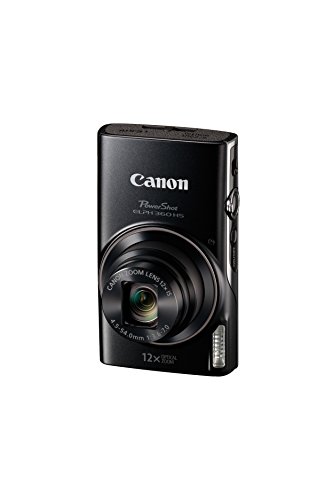
The Canon PowerShot ELPH 360 HS is the most capable camera in this guide, and a natural step up for a tween who has already shown a real interest in photography. Its 20.2 megapixel CMOS sensor works with the DIGIC 4+ image processor to capture detailed stills, even in dim indoor light, and the 12x optical zoom lens covers a 25 to 300mm equivalent range. That reach turns distant subjects, from a player on a field to a bird in a tree, into frame-filling photographs, while optical image stabilization helps keep handheld shots sharp at the long end of the zoom.
The ELPH 360 HS also brings the most modern convenience features of the three. Built-in Wi-Fi and NFC let a tween send photos to a phone or tablet with the free Canon Camera Connect app, which makes sharing with family quick and keeps the camera useful alongside the devices a tween already uses. The 3.0 inch LCD screen is the largest here, and creative shooting modes such as Creative Shot, Miniature Effect, and Toy Camera Effect invite experimentation without demanding any technical knowledge.
There are two things to weigh before choosing this model. First, its rechargeable lithium-ion battery pack needs its charger nearby, so a spare battery is a useful addition for long days out. Second, the extra zoom and wireless features make it the most feature-rich option, which suits an enthusiastic tween well but more than a casual beginner needs. For a tween who is ready to grow into a camera and keep it for several years, the ELPH 360 HS is the strongest long-term pick in this guide.
Comparison at a Glance
| Camera | Sensor and Zoom | Video and Screen | Power |
|---|---|---|---|
| KODAK PIXPRO FZ55-BK | 16MP CMOS, 5x optical zoom, 28mm wide angle | 1080p Full HD video, 2.7 inch LCD | Rechargeable battery |
| KODAK PIXPRO FZ45-BK | 16MP CMOS, 4x optical zoom, 27mm wide angle | 1080p Full HD video, 2.7 inch LCD | Two AA batteries |
| Canon PowerShot ELPH 360 HS | 20.2MP CMOS, 12x optical zoom, 25 to 300mm equivalent | 1080p Full HD video, 3.0 inch LCD | Rechargeable lithium-ion pack |
FAQ
What age is a tween camera best for?
Tweens are generally 9 to 12 years old. At this age, most children have hands large enough to hold a compact point-and-shoot camera steadily and the patience to learn basic framing and focus. A camera with simple auto modes suits a 9 year old, while a 12 year old may already want the extra zoom and wireless features of a more capable model.
Should a tween start with a dedicated camera instead of a phone?
A dedicated camera has real advantages for learning. It has an optical zoom lens, a proper shutter button, and no apps competing for attention. That separation helps a tween concentrate on photography itself. A phone is convenient, but a camera teaches composition, patience, and the habit of looking carefully before shooting.
How much memory card storage does a tween need?
A 32GB SD card is a practical starting point for a tween. It holds a large number of 16 to 20 megapixel photos and a reasonable amount of Full HD video, which is plenty for school projects and holidays. A 64GB card is worth considering if your tween films a lot of video. Always check that the card is a standard SD, SDHC, or SDXC card that matches the camera.
Do these cameras need Wi-Fi to work?
No. Every camera in this guide takes photos and video with no wireless connection at all. Wi-Fi and NFC, found on the Canon ELPH 360 HS, are optional conveniences for sending photos to a phone or tablet. Photos can always be moved to a computer with a memory card reader or a USB cable.
What accessories should a tween get with a first camera?
Start with three essentials: a memory card, a wrist strap or neck strap, and a small padded case. A spare battery or a spare set of AA batteries is the next most useful addition, followed by a microfiber cloth for cleaning the lens. A small tripod can wait until a tween shows interest in long exposures or group photos that include the photographer.
Conclusion
The best digital cameras for tweens are the ones a young photographer will actually carry and use. The KODAK PIXPRO FZ45-BK is the simplest starting point, with AA batteries and an unintimidating design that suits a younger tween. The KODAK PIXPRO FZ55-BK adds a little more zoom and a rechargeable battery for everyday shooting. The Canon PowerShot ELPH 360 HS brings the longest zoom, the largest screen, and wireless sharing for a tween who is ready to take photography further. Whichever you choose, pair it with a memory card and a case, hand it to your tween, and let the learning begin one photo at a time.
Disclosure: As an Amazon Associate, stanthonyscalgary.com earns from qualifying purchases.
Related guides
More from Amazon
Programs that pair well with the guide above. Offers and eligibility are set by Amazon and may change.
Free shipping on eligible items, Prime Video and more. Eligible new members can start with a free trial.
Start a Prime free trialAudiobooks and podcasts to listen to on the go. Eligible new members can start with a free trial.
Try Audible freeAd-free music streaming. Eligible new subscribers can start with a free trial.
Try Music Unlimited freeA free business account with business pricing and bulk-buying tools for work, shop or home office.
Create a business accountAs an Amazon Associate we earn from qualifying purchases.
Write Your Review
No reviews yet. Be the first to share your experience!