
Key takeaways
- Compare trail cameras for deer scouting, with no-glow infrared, fast trigger speeds, waterproof housings and wide detection for trails and feed sites.
What's inside
As an Amazon Associate I earn from qualifying purchases. This post may contain affiliate links at no extra cost to you.
Scouting well means learning when deer move through a crossing, not simply collecting the sharpest photograph. A camera that fires late captures tails and empty trails, while one whose infrared glows visibly can shift cautious animals away from the spot you hoped to study. Trigger behaviour, night illumination, detection width, and weather sealing therefore decide whether a placement actually teaches you anything useful.
The hunters and landowners this shortlist serves need cameras that can sit unattended on a tree for weeks and report honestly. Each selection comes from its Amazon listing, where the product is described as a trail or game camera for hunting, wildlife monitoring, or deer scouting, with stated trigger speeds, infrared type, and waterproof ratings quoted only as listed.
Quick Picks
As an Amazon Associate we earn from qualifying purchases
| Product | Best for | Key spec from title |
|---|---|---|
| Meidase P70 Trail Camera | Card-based scouting without connectivity | 64MP 1296p with no-glow IR night vision |
| GardePro A3 Trail Camera | Night crossings on a main trail | 48MP 1296p with 100ft no-glow infrared |
| iZEEKER iG200 Trail Camera | Quiet spots near bedding cover | 940nm no-glow night vision, 0.2s trigger |
| GardePro E5S Trail Camera 2 Pack | Watching two funnels at once | 64MP 1296p with 100ft no-glow night vision |
| Stealth Cam G42NG Trail Camera | Long sits on a proven route | 1080p with No Glo trail and wildlife design |
How to Choose
Trigger Speed Decides What You Actually Record
Deer rarely pause in the centre of a detection zone, especially on a travelling route rather than at feed. A stated trigger time of 0.1 or 0.2 seconds gives the camera a far better chance of catching the animal’s body and head, which is what you need for identifying individuals and direction of travel. Slower activation suits a stationary target area where animals linger. Match the speed to the placement: fast for crossings and narrow trails, more relaxed for a scrape or feeding spot where visits last longer and repeat.
No-Glow Infrared Keeps a Placement Inconspicuous
Infrared arrays fall into low-glow and no-glow families, and the distinction matters around pressured deer. Listings here describe 940nm no-glow emitters that produce no visible flash, so the camera can record at night without a red glow drawing attention to the tree. Range claims such as 82 feet or 100 feet describe the stated night vision reach, not a guarantee of a clear identification at that distance. Position the camera closer than the maximum figure, aim along the trail rather than straight across it, and clear foreground grass that could bounce light back.
Detection Angle and Shot Placement Work Together
A wide detection angle sounds helpful until it triggers on movement at the edge of frame, producing half an animal or an empty sequence. Cameras listing 110 or 120 degrees of detection need careful angling so the sensor’s sweet spot overlaps the part of the trail where deer actually walk. Mount at roughly waist to chest height, tilt slightly downward, and face the camera north where possible to reduce sun-triggered false events. Walk the route yourself during setup, review the test images, and adjust before leaving the unit for a long unattended stretch.
Power, Storage, and Weather Sealing for Long Sits
A scouting camera earns its keep over weeks, so battery arrangement and sealing matter as much as resolution. Models running on AA cells are easy to service during a brief visit, while a stated standby life only holds if trigger volume stays moderate. Waterproof ratings such as IP66 indicate resistance to rain and dust, yet a sheltered mount under a branch still reduces water on the lens. Use a card with capacity matched to your visit interval, lock the camera to the tree, and note the settings you chose so the next check is quicker.
The 5 Best Options
Meidase P70 Trail Camera
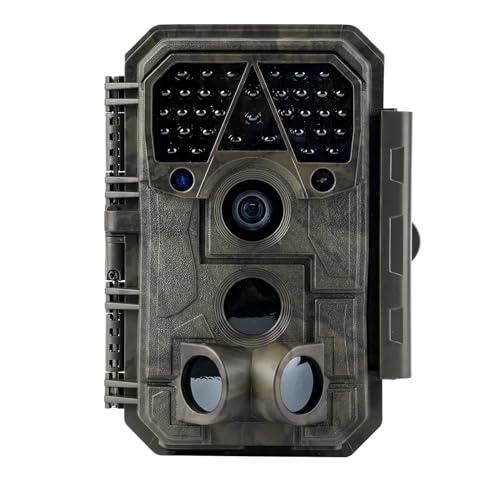
A straightforward card-based unit appeals when the property has no reliable signal and you prefer reviewing images at home. The listing names deer among its specific uses, describes no-glow infrared reaching a stated 100 feet, and keeps the camera non-cellular and non-WiFi, which removes app setup and subscription questions from the decision. That simplicity suits a hunter running several placements on foot, swapping cards on a loop, and comparing movement across a season without wanting notifications every time a squirrel crosses in front of the lens during daylight hours.
Specs
- Brand: Meidase
- Model name: P70
- Photo resolution: 64MP
- Video resolution: 1296p
- Night vision: No-glow IR, up to 100ft range per listing
- Specific uses: Deer Camera, Game Camera, Hunting Camera, Trail Camera, per listing
- Connectivity: Non-cellular, non-WiFi, per listing title
- Motion: Motion activated, per listing title
- Housing: Waterproof, per listing title
Best for: Simple card swaps on properties visited in person.
Watch out for: Plan card capacity around your visit interval, because there is no remote delivery of images to warn you a card is filling.
ASIN: B0D5LCW4SM
GardePro A3 Trail Camera

Night movement is the focus of this model, whose listing highlights clear night vision and a fast stated trigger for animals passing rather than feeding. A Sony Starvis sensor is named in the description, alongside smart imaging intended to reduce the washed-out or overly dark frames that plague night photographs of deer at uneven distances. It suits a main crossing between bedding and feeding ground, where most traffic happens after dark and a missed trigger means losing the only evidence of which animals use that route during the week.
Specs
- Brand: GardePro
- Model: A3
- Photo resolution: 48MP
- Video: 1296p H.264 HD video
- Night vision: 100ft no-glow infrared, 940nm per listing
- Trigger speed: 0.1s, per listing title
- Sensor: Sony Starvis, per listing description
- Activation: Motion activated
- Housing: Waterproof, per listing title
- Use: Wildlife deer game trail, per listing title
Best for: After-dark crossings where timing matters most.
Watch out for: Test the night exposure distance at home first, since animals much closer than the trail centre can appear brighter than expected.
ASIN: B0BS2J272S
iZEEKER iG200 Trail Camera

Close cover and wary animals call for a camera that stays invisible and reacts quickly, and this listing leans on both points. It describes 940nm no-glow infrared, a stated 0.2-second trigger, and IP66 waterproofing, with deer scouting named directly in the title. That combination fits a scrape line, a water source, or the edge of bedding cover where a visible flash or a slow wake-up would undermine the placement. Hunters who check cameras infrequently and on foot will value a sealed, self-contained unit that simply records to a card between visits.
Specs
- Brand: iZEEKER
- Model: iG200
- Type: Trail camera, HD game camera, per listing title
- Night vision: 940nm no-glow, per listing title
- Trigger time: 0.2s, per listing title
- Waterproof rating: IP66, per listing title
- Activation: Motion activated, no WiFi per listing title
- Use: Wildlife monitoring and deer scouting, per listing title
- Light source: No-glow infrared LEDs, per listing
Best for: Sensitive spots where any visible glow is unwanted.
Watch out for: Confirm card requirements before deployment, and carry a spare card so a swap does not require handling images in the field.
ASIN: B0BKG286NJ
GardePro E5S Trail Camera 2 Pack
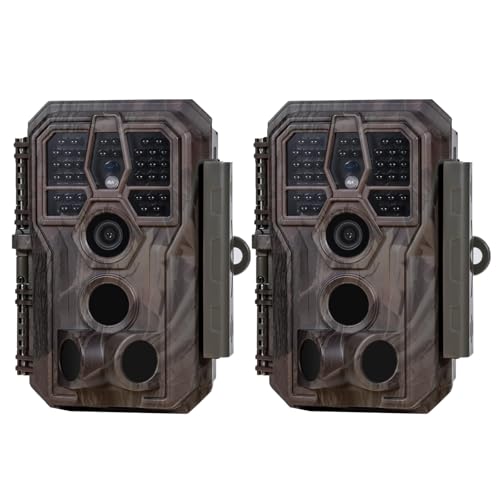
Covering two locations at once is often more informative than upgrading a single camera, because deer that avoid one funnel may use another nearby. This two-pack listing offers a matched pair with the same stated resolution and night vision reach, so settings and image character stay consistent across both placements. That consistency helps when comparing timestamps between a field edge and an interior trail. It suits a landowner mapping a whole property at the start of a season, or partners who each run one unit and pool the findings before deciding where to focus later efforts.
Specs
- Brand: GardePro
- Model: E5S
- Pack: 2 pack, per listing title
- Photo resolution: 64MP
- Video resolution: 1296p
- Night vision: 100ft no-glow, motion activated per listing title
- Infrared LEDs: 940nm no-glow, per listing
- Housing: Waterproof, per listing title
- Use: Deer wildlife cam and hunting, per listing title
- Detection note: Ultra-fast motion detection, per listing description
Best for: Comparing two crossings with matched cameras.
Watch out for: Label each camera and its cards clearly before deployment, otherwise images from two similar sites are easy to mix up later.
ASIN: B0DJ572M2C
Stealth Cam G42NG Trail Camera

An established name in the category, this model centres on its no-glow black infrared emitters and a stated night range suited to a trail-width view. The listing describes a trail and wildlife camera designed for hunters, capturing stills and HD video with audio over clips of varying length. It fits a proven route where you already know deer pass and want a dependable record of timing and direction across many weeks. Buyers who prefer a long-running model line with familiar controls, rather than the newest connectivity features, will find that straightforward brief appealing.
Specs
- Brand: Stealth Cam
- Model name: STC-G42NG
- Type: No Glo trail and wildlife camera, per listing
- Photo resolution: 32MP, per listing description
- Video: HD video with audio, 1080p in listing title context
- Night vision: 42 black IR emitters, no glow
- Night range: 80 foot visibility, per listing description
- Antenna location: Game and Trail, per listing
- Design note: Designed and engineered in the USA, per listing
Best for: A known route monitored over a long season.
Watch out for: Check the card and battery format you already own against this model’s requirements, as long-running lines can differ from newer units.
ASIN: B00HMN7H04
Which One Fits Your Situation
You Scout One Busy Crossing After Dark
Take the GardePro A3. Its fast stated trigger and emphasis on clear night vision suit a crossing where deer pass through rather than stop, and where most of the useful evidence arrives in darkness. Aim it along the trail at an angle so animals stay in the detection zone longer, giving the camera more than a single instant to record a recognisable image of each passing deer.
You Watch Two Parts of the Same Property
The GardePro E5S two-pack lets you run a field edge and an interior trail simultaneously with matched settings. Comparing timestamps across both spots reveals whether deer stage inside the cover before emerging, or move straight to feed. That pattern is hard to learn from a single placement, and a matched pair avoids image differences that come from mixing unrelated camera models with different triggers and night illumination behaviour.
You Leave Cameras Unattended for Weeks
Consider the Meidase P70 for a simple, non-connected setup. With no app link to maintain and images stored on a card, the routine is a quiet visit, a card swap, and a battery check. Its stated no-glow night reach covers a trail or clearing edge, and the deer-specific uses named in the listing match a hunter who reviews a whole period of movement at once rather than reacting to individual photographs as they arrive.
You Hunt Pressured Deer That Avoid Anything New
Choose the iZEEKER iG200 for its 940nm no-glow positioning and quick stated trigger. Around bedding cover or a scrape that wary animals visit cautiously, an invisible night array reduces the chance that the camera itself changes behaviour at the site. Keep your own disturbance low as well: check it at midday, swap cards quickly, and avoid leaving scent or trimmed branches that advertise a recent human visit.
Common Mistakes
- Aiming straight across a trail so fast-moving deer leave the frame before the camera fires.
- Mounting too high or too low, then cropping heads or bodies out of most images.
- Checking cameras too often and leaving scent that shifts deer movement away from the site.
- Trusting the maximum night range figure instead of placing the camera well inside it.
- Mixing cards between cameras, which scrambles dates and makes movement patterns hard to read.
Frequently Asked Questions
Where should a deer camera be placed first?
Start where several trails converge, at a creek crossing, or on the edge between bedding cover and a feeding area. Those funnels concentrate movement, so even a short first deployment teaches you travel direction and timing. Mount the camera on a sturdy tree, aim along the route, and review the first images before committing to a longer sit.
Does no-glow infrared really matter for deer?
Listings describe no-glow arrays, often 940nm, as producing no visible flash at night. Around cautious or heavily hunted animals, that invisibility protects the natural behaviour you are trying to observe. On an unpressured property at a feeding spot the difference may be smaller, but for bedding edges and scrapes, no-glow remains the safer choice for most scouting.
How often should trail cameras be checked?
Match the interval to battery and card capacity, and to how much disturbance the site can tolerate. Many hunters check every few weeks during early scouting, then leave cameras alone as the season approaches. A midday visit in steady wind, with a quick card swap, gathers the information while keeping your presence at the site as brief as possible.
Can one camera cover a whole property?
Rarely. A single unit watches one crossing or clearing edge well, but deer use different routes as food and cover change through the season. Two cameras on separate funnels, even modest ones, usually teach you more than one camera moved repeatedly, because moving a unit breaks the timeline you need to spot patterns in movement and timing.
Related guides
More from Amazon
Programs that pair well with the guide above. Offers and eligibility are set by Amazon and may change.
Free shipping on eligible items, Prime Video and more. Eligible new members can start with a free trial.
Start a Prime free trialAudiobooks and podcasts to listen to on the go. Eligible new members can start with a free trial.
Try Audible freeAd-free music streaming. Eligible new subscribers can start with a free trial.
Try Music Unlimited freeA free business account with business pricing and bulk-buying tools for work, shop or home office.
Create a business accountAs an Amazon Associate we earn from qualifying purchases.
Write Your Review
No reviews yet. Be the first to share your experience!