
Key takeaways
- Compare Canon full-frame pro bodies for weddings, sports and studio work, with sensor, speed and video specs to guide a professional choice.
What's inside
As an Amazon Associate I earn from qualifying purchases. This post may contain affiliate links at no extra cost to you.
Choosing a professional Canon body is rarely about finding a bad camera; it is about matching resolution, burst speed, and video depth to paid work where a missed frame or a soft file has a client attached to it. Weddings, sport, and studio portraiture each punish a different weakness, and a body that feels perfect for one brief can become an expensive compromise on the next paying job.
This shortlist is aimed at working photographers and serious hybrid shooters already committed to Canon. Every body below was picked from its Amazon listing name and stated specifications, limited to Canon full-frame professional models with the sensor, processor, frame rate, and mount details given on the page, so that comparisons rest on listed facts rather than on rumours, hopes, or specifications borrowed from a different camera generation altogether.
Quick Picks
As an Amazon Associate we earn from qualifying purchases
| Product | Best for | Key spec from title |
|---|---|---|
| Canon EOS R5 Mark II | High-resolution hybrid client work | Full-Frame Back-Illuminated Sensor, 45MP, 8K Video |
| Canon EOS R3 | Sports and action under deadline | 24.1 Megapixel CMOS Sensor, 6K 60p RAW, 4K 120p |
| Canon EOS R5 | Studio and landscape detail | 45 Megapixel CMOS Sensor, 8K Video, Up to 12 FPS |
| Canon EOS R6 Mark II | Weddings and events in low light | 24.2 Megapixel CMOS Sensor, Full-Frame Camera |
| Canon EOS R5 C | Cinema-led professional production | 45 Megapixel CMOS Sensor, 8K/60P Internal RAW |
How to Choose
Match Megapixels to the Final Delivery
Resolution should follow the billboard, the album, and the crop, not a headline number. A 45-megapixel file from the EOS R5 family leaves room to recompose a group portrait or deliver large prints, whereas a 24.1 or 24.2 megapixel file moves faster through a sports edit and still covers double-page spreads comfortably. Ask how often clients truly need aggressive cropping. If the answer is rarely, the smaller file size can speed storage, backup, and turnaround on every single job you deliver.
Weigh Burst Speed Against Buffer and Cards
Fast continuous shooting only helps if the camera, card slots, and your workflow sustain it through a decisive sequence. Listings here cite up to 12 fps for the original EOS R5, while the R3 is positioned in its title for sports and action with high-speed video to match. Consider the media each body writes to, how quickly you can ingest after a match or ceremony, and whether a second slot mirrors files for instant backup, because professional reliability is a system, not a single specification.
Separate Stills Needs From Cinema Needs
Hybrid is a spectrum. The EOS R5 and R5 Mark II list 8K video alongside stills, the R3 adds 6K 60p RAW and 4K 120p, and the R5 C is described as a hybrid full-frame cinema camera with 8K/60P internal RAW recording. If video is occasional, a stills-first body keeps menus and handling familiar. If clients buy films as a primary product, the cinema-oriented body deserves priority even when its stills headline looks similar on paper at first glance in a shop.
Confirm Lens Mount and Existing Glass
All five bodies here use the RF mount named in several listings, so your current EF collection, adapter plans, and the RF lenses you intend to rent belong in the decision. A body upgrade that strands a favourite working lens helps nobody. Check the exact kit contents too: some listings are body only, others include an RF24-105mm F4 L IS USM lens, and that difference changes both the immediate effort of switching and what you can shoot on delivery day.
The 5 Best Options
Canon EOS R5 Mark II

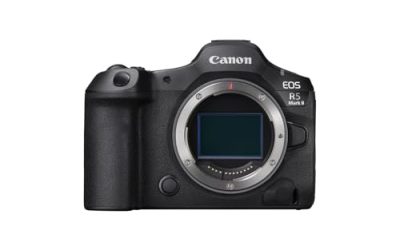
Professionals who need one body to carry a wedding day, a commercial portrait session, and a serious video commission should start here. The listing describes a full-frame back-illuminated sensor with 45MP and 8K video, calling it a hybrid camera for photography and video. That combination promises detailed stills with genuine cropping headroom plus a video specification clients can recognise. For a solo operator replacing an older body as the main tool rather than a backup, this is the most current all-round proposition in the group.
Specs
- Mirrorless Camera with RF24-105mm F4 L IS USM Lens in this listing variant
- Full-Frame Back-Illuminated Sensor
- 45MP
- 8K Video
- Photography and Video, Hybrid Camera
- Black, model name EOS R5 Mark II
Best for: Hybrid professionals wanting 45MP stills and 8K video from one main body.
Watch out for: Confirm whether the listing you open is body only or the RF24-105mm lens kit, since both variants exist under similar names.
ASIN: B0D9KNNJVK
Canon EOS R3

News, sport, and wildlife photographers working to a same-day deadline are the clear audience for this body. Its listing states a 24.1 megapixel CMOS sensor with DIGIC X, 6K 60p RAW, and 4K 120p video, and names sports and action directly. The lower megapixel count compared with the R5 models keeps files leaner for volume shooting, while the video figures support slow-motion sequences. If your income depends on nailing a peak moment rather than printing the largest possible file, the R3 brief is the sharpest here.
Specs
- Mirrorless Camera (Body Only)
- Full-Frame Camera
- 6K 60p RAW and 4K 120p Video
- 24.1 Megapixel CMOS Sensor
- DIGIC X Image Processor
- For Sports, Action, Black
Best for: Sports and action photographers filing large volumes under deadline.
Watch out for: Check card requirements for 6K RAW recording before the first assignment, because high-bitrate video needs appropriate media.
ASIN: B09FFTM3F6
Canon EOS R5
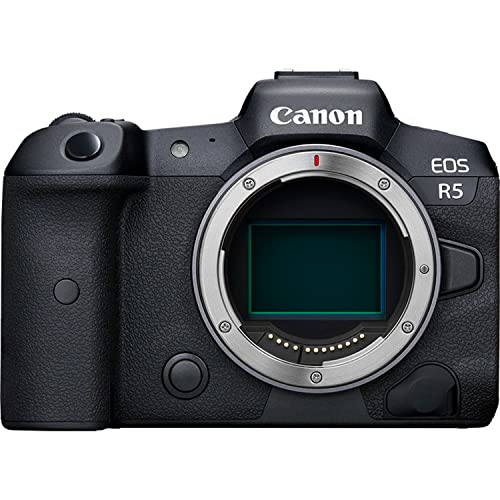
Studio portraitists, landscape specialists, and commercial photographers who crop deliberately will recognise the appeal of the original R5. The body-only listing gives a 45 megapixel CMOS sensor, DIGIC X processor, 8K video, up to 12 fps, and the RF mount. That specification centres on file quality first, with enough speed for posed and semi-paced work rather than relentless action. Photographers whose clients buy detail, retouching latitude, and large output, and who do not need the newest Mark II refinements, should keep this established body firmly in contention.
Specs
- Mirrorless Camera (Body Only)
- Full-Frame Hybrid Camera
- 8K Video
- 45 Megapixel CMOS Sensor
- DIGIC X Image Processor
- Up to 12 FPS, RF Mount, Black
Best for: Studio and commercial photographers prioritising 45MP file detail.
Watch out for: Verify the listing is the body-only version and not a lens kit or a renewed bundle before comparing it with other bodies.
ASIN: B08C68F2DX
Canon EOS R6 Mark II

Wedding and event photographers who spend half the day in dim venues form the natural market for this model. The body-only listing describes a full-frame camera with a 24.2 megapixel CMOS sensor and photo and video capabilities, a resolution that balances low-light work, manageable file sizes, and fast delivery galleries. It sits below the 45MP bodies for sheer detail, yet that trade can be sensible when you return with thousands of frames. As a main event body or a second body beside an R5, it makes a pragmatic professional case.
Specs
- Mirrorless Camera (Body Only)
- Full-Frame Camera
- 24.2 Megapixel CMOS Sensor
- Photo and Video Capabilities
- Black
- Model number 5666C002
Best for: Wedding and event photographers needing balanced files for fast turnaround.
Watch out for: Confirm your existing cards and batteries match this body if it will serve as a second camera beside another EOS R model.
ASIN: B0BL7ZVY78
Canon EOS R5 C

Filmmakers who also deliver stills, rather than photographers who occasionally record clips, should examine the R5 C closely. The listing calls it a hybrid full-frame cinema camera, body only, with a 45 megapixel CMOS sensor and 8K/60P internal RAW recording on the RF mount. That cinema-first framing separates it from the standard R5, even though the megapixel figure matches. Production teams building a Canon cinema kit, where internal RAW is a client or post-production requirement, are precisely the buyers this variant was named for.
Specs
- Mirrorless Camera (Body Only)
- 45 Megapixel CMOS Sensor
- Hybrid Full-Frame Cinema Camera
- 8K/60P Internal RAW Recording
- RF Mount
- Black
Best for: Cinema-led professionals who need 8K/60P internal RAW and stills from one Canon body.
Watch out for: Check the exact recording media and workflow for internal RAW before committing, since RAW files place heavy demands on storage and editing systems.
ASIN: B0B1935YM9
Which One Fits Your Situation
You Shoot Weddings From Prep to Party
Consider the EOS R6 Mark II as the workhorse, or the R5 Mark II if clients regularly order large albums and video together. The R6 Mark II keeps gallery sizes manageable across a long day, while the Mark II adds 45MP detail and 8K video. Either way, pair the choice with a second body plan for ceremony security.
You Cover Sport for Agencies and Clubs
Go to the EOS R3. Its listing names sports and action outright, pairs a 24.1 megapixel sensor with DIGIC X, and adds 6K 60p RAW plus 4K 120p for motion work. Files stay lean enough for rapid selection and transmission, which matters more on deadline than maximum resolution that slows the entire edit down.
You Run a Portrait and Product Studio
Choose between the EOS R5 and the R5 Mark II. Both centre on 45 megapixel full-frame files suited to retouching and large prints. The original R5 lists up to 12 fps and 8K video, while the Mark II listing highlights a back-illuminated sensor. Decide by whether the newer body refinements justify stepping up from the proven model.
Video Commissions Pay Most of Your Bills
Look first at the EOS R5 C. It is the only body here described as a cinema camera, with 8K/60P internal RAW recording stated in its title, while retaining a 45 megapixel sensor for stills. That ordering of priorities matches a production workflow, where video media, monitoring, and post-production needs outweigh stills-only handling preferences.
Common Mistakes
- Choosing the highest megapixel count for every genre, then paying for it in cards, storage, backup time, and slower client delivery on volume jobs.
- Ignoring kit contents and comparing a body-only listing against a lens kit as if they were the same purchase, which distorts what switching systems really involves.
- Planning a professional upgrade without checking RF mount compatibility, adapter needs, and rental availability for the lenses a typical assignment actually requires.
- Buying a cinema-oriented body for occasional clips, or a stills-first body for RAW video production, instead of matching the camera line to the work that pays.
- Running a paid shoot on a single body with no backup plan, when a mechanical fault, card failure, or accident can end the assignment regardless of how capable the main camera is.
Frequently Asked Questions
Is 24 megapixels enough for professional work?
For many assignments, yes. The 24.1 and 24.2 megapixel bodies here suit sports, weddings, and editorial delivery, including large spreads, while producing smaller files that move quickly. Choose a 45 megapixel body instead when heavy cropping, very large prints, or detailed commercial retouching are routine parts of your paid work.
What separates the EOS R5 C from the EOS R5?
The listing language gives the clue. The R5 C is described as a hybrid full-frame cinema camera with 8K/60P internal RAW recording, while the R5 is presented as a full-frame hybrid camera with 8K video and up to 12 fps. Both list 45 megapixel sensors, so the decision rests on production priorities.
Should a wedding photographer pick the R5 Mark II or R6 Mark II?
Pick the R5 Mark II for maximum detail, cropping freedom, and 8K video in one body. Pick the R6 Mark II when faster gallery turnaround and smaller files across thousands of frames matter more. Many professionals also pair one of each, using the higher-resolution body for portraits and the other for candid coverage.
Do these Canon bodies use the same lenses?
The listings name the RF mount for the R5, R5 Mark II kit, and R5 C, and the other bodies are EOS R system models in the same Canon mirrorless line. Still, confirm mount and adapter details on the exact listing before buying, especially if you plan to keep using older Canon glass on paid assignments.
Related guides
More from Amazon
Programs that pair well with the guide above. Offers and eligibility are set by Amazon and may change.
Free shipping on eligible items, Prime Video and more. Eligible new members can start with a free trial.
Start a Prime free trialAudiobooks and podcasts to listen to on the go. Eligible new members can start with a free trial.
Try Audible freeAd-free music streaming. Eligible new subscribers can start with a free trial.
Try Music Unlimited freeA free business account with business pricing and bulk-buying tools for work, shop or home office.
Create a business accountAs an Amazon Associate we earn from qualifying purchases.
Write Your Review
No reviews yet. Be the first to share your experience!